

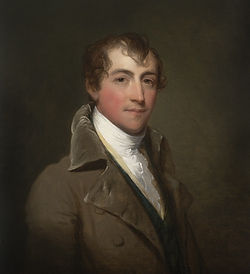
Philip Jeremiah Schuyler
BIRTH
Jan 21, 1768
Albany, New York
DEATH
February 21, 1835
New York City, New York
FAMILY
FATHER:

Philip Schuyler
(1733-1804)
MOTHER:

Catherine Van Rensselaer Schuyler
(1734-1803)
##
Schuyler, Philip Jeremiah
(1768-1835)
Philip Jeremiah Schuyler (January 21, 1768 – February 21, 1835) was an American politician from New York. His siblings included Angelica Schuyler, Elizabeth Schuyler Hamilton, and Margarita Schuyler Van Rensselaer.
1
SISTER

Angelica Schuyler Church
(1756-1814)
SISTER

Catherine Van Rensselaer Cochran
(1781-1857)
BROTHER

Elizabeth Schuyler Hamilton
(1757-1854)
SISTER

Margarita "Peggy" Schuyler Van Rensselaer
(1758-1801)
WIFE
Mary Ann Sawyer Schuyler
(1786-1871)

Catherine Van Rensselaer Schuyler
(1734-1803)
Robert Schuyler
(1798-1855)
Places | Image | Address | GPS | Site |
|---|---|---|---|---|
Schuyler Mansion State Historic Site | 32 Catherine St, Albany, NY 12202 | MUSEUM |
DIED:
New York City, New York
Feb 21, 1835


Philip Jeremiah Schuyler was born on January 21, 1768, in Albany, New York, the son of Philip Schuyler and Catherine Van Rensselaer Schuyler. He was one of fifteen children born into two of New York’s most powerful Dutch-descended families. His father was a wealthy landowner, merchant, Continental general, and politician; his mother came from the extensive Van Rensselaer manor family. Philip Jeremiah’s siblings included Angelica Schuyler Church, Elizabeth Schuyler Hamilton, and Margarita “Peggy” Schuyler Van Rensselaer. His childhood was inseparable from the Revolution. The Schuyler mansion in Albany and the family’s Saratoga estate served as centers of military planning and hospitality. Officers, political leaders, servants, tenants, and enslaved people moved through the household. British forces threatened the Hudson Valley, and the family periodically faced danger and displacement. Philip Jeremiah was only nine during Burgoyne’s campaign and the surrender at Saratoga, events in which his father played a major role. As a wealthy family’s son, he received private instruction in reading, writing, arithmetic, languages, and the classical subjects appropriate to public life. He also learned estate management and the obligations attached to the family’s vast property interests. The Schuylers’ wealth rested partly on enslaved labor and on a patroon-like network of landownership and tenancy. He studied at Columbia College, graduating in 1788, and then prepared for adult responsibility through law, business, and management of family lands. His education placed him among the first generation trained in institutions reshaped by American independence rather than under purely colonial government. Before serving in Congress or state politics, Philip Jeremiah had been formed by a large and intensely public household, Dutch-American aristocratic traditions, wartime uncertainty, elite schooling, and close observation of his father’s military and political career. Being a younger son required him to establish a distinct role while still carrying the advantages and expectations of the Schuyler name.
The available biographical record identifies Philip Jeremiah Schuyler with work or public activity as a statesman. Those roles provide the clearest documented basis for including this person in the database and should be read in the political, military, professional, or household context of the period. Philip Jeremiah Schuyler died on Feb 21, 1835 in New York City, New York. Additional claims about employment, public service, or accomplishments have been omitted where the consulted source did not support them.