

Aisha
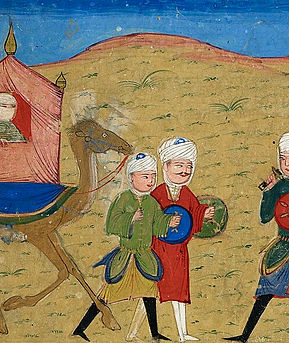
(c. 613 AD-678 AD)
BIRTH
c. 613 AD
PLACE
Mecca, Saudi Arabia
NAME
Aisha bint Abi Bakr
DEATH
678 AD
PLACE
Medina, Saudi Arabia
FAMILY

FATHER
Abu Bakr
(dates unknown)

HUSBAND
Muhammad
(c. 570-632)
CHILDREN
Umm Ruman
(dates unknown)

HUSBAND
Muhammad
(c. 570-632)
HOMES
NICKNAMES
Humayra
RELIGIOUS VIEWS
MUSLIM
DENOMINATION NOT DOCUMENTED
MEMBERSHIPS
AWARDS
Aisha bint Abi Bakr was a wife of the Prophet Muhammad and the daughter of the first caliph, Abu Bakr. She grew up in one of the first Muslim families. Around AD 627 Aisha was accused of adultery after she was left behind by a caravan. In AD 656, after the murder of the caliph Uthman, Aisha opposed the new caliph, Ali, and was defeated at the Battle of the Camel near Basra. Muhammad died in AD 632 in her apartment in Medina and was buried there.
EARLY LIFE
Aisha was born around AD 613 or 614 in Mecca, the daughter of Abu Bakr, one of Muhammad's closest companions, and his wife Umm Ruman. She grew up in one of the first Muslim families. According to Islamic tradition, she was betrothed to Muhammad in Mecca, and the marriage was consummated in Medina after the migration of the Muslims there in AD 622. Her age at marriage is recorded in some traditions and has been much debated by historians and scholars.
Aisha bint Abi Bakr became a central figure in the early Muslim community through her marriage to Muhammad and her position in the household at Medina. Accounts preserved in Islamic tradition describe her participating in community life, remembering the Prophet's conduct, and asking questions about religious practice. Narratives about an accusation against her and her subsequent vindication are connected with passages of the Quran. These are transmitted religious accounts, not a modern documentary record of every event in her life.
After Muhammad's death in 632, Aisha retained authority as one of his widows, known as Mothers of the Believers. Her father Abu Bakr became the first caliph. She was consulted on religious matters and later criticized aspects of Caliph Uthman's government. Following Uthman's killing in 656, she opposed the new caliph Ali in the conflict over responsibility and punishment. Together with Talha and al-Zubayr, she joined a movement that gathered support and moved toward Basra, contributing to the first major civil war within the Muslim polity.
The confrontation culminated in the Battle of the Camel in 656, named for the camel on which Aisha was positioned during the fighting. Ali's forces prevailed, and Talha and al-Zubayr were killed. Ali arranged for her return to Medina. Accounts differ in their assessment of the participants' motives and responsibility, and later Sunni and Shi'a traditions developed sharply contrasting views. Her role should therefore be described without turning the judgments of one confessional tradition into an uncontested historical conclusion.
Aisha's subsequent importance rested especially on teaching and the transmission of reports about Muhammad. Reports credit her with correcting other companions' interpretations. More than two thousand hadith are traditionally attributed to her, covering worship, household life, ethics, and legal questions. The attribution of a report to her is part of a chain of transmission assessed by later scholars; it does not mean that all surviving reports have the same historical certainty. She died in Medina in 678 according to the conventional chronology. Her career demonstrates women's participation in the formation of Islamic learning as well as direct involvement in political conflict. Her scholarly authority survived military defeat and made her a lasting reference point in hadith, jurisprudence, and debates over leadership.
CAREER
DEATH
Aisha died at her home in Medina in the year 58 AH, conventionally dated to July 16, 678, on the seventeenth day of Ramadan. Traditional accounts commonly give her age as about 67, although the chronology depends on the biographical traditions used. Her later life had been spent in Medina, where she taught and transmitted reports concerning Muhammad's life and the early Muslim community. The source reviewed records her death, funeral prayer and burial but does not establish a specific terminal disease or a detailed sequence of final symptoms. It would therefore be inappropriate to infer a medical cause from her age or to use accounts of Muhammad's final illness as though they described her own. Abu Hurayra is reported to have led the funeral prayer at night, and she was buried in the al-Baqi cemetery. These details belong to the transmitted Islamic biographical account and should be presented with that attribution rather than as a modern clinical record. Her death ended the life of a major early transmitter and religious authority, but the exact physical cause remains unassigned in the evidence consulted. A more elaborate bedside scene would require sources beyond the brief account available here.
Al-Baqi cemetery
Al-Baqi Cemetery, southeast of Al-Masjid an-Nabawi, Medina, Saudi Arabia

GRAVE
POPULAR BIOGRAPHIES
1. Politics, Gender, and the Islamic Past: The Legacy of 'A'isha bint Abi Bakr — Denise A. Spellberg. [Historical and biographical study] Find on Amazon
2. Aisha: The Wife, the Companion, the Scholar — Resit Haylamaz. [Religious biography] Find on Amazon
3. Aishah: The Beloved of Mohammed — Nabia Abbott. Find on Amazon
4. Aisha bint Abu Bakr — Saniyasnain Khan. [Biography for younger readers] Find on Amazon
5. Women and Gender in Islam: Historical Roots of a Modern Debate — Leila Ahmed. [Historical study including Aisha] Find on Amazon
102327