

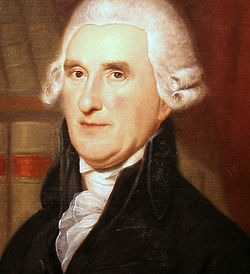
Thomas McKean
BIRTH
Mar 19, 1734
New London, Pennsylvania
DEATH
June 24, 1817
Philadelphia, Pennsylvania
President of the Continental Congress
Jul 10, 1781 - Nov 5, 1781
FAMILY
##
McKean, Thomas
(1734-1817)
Thomas McKean was a Delaware lawyer and Continental congressman who signed the Declaration of Independence and Articles of Confederation. He also served in the militia, became president of the Continental Congress, and held leading offices in Delaware and Pennsylvania.
1
SISTER

Sally McKean de Irujo
(1777-1841)
WIFE
Sarah Armitage McKean
(1747-1820)
WIFE
Mary Borden
(?-1773)
Sally McKean de Irujo
(1777-1841)
Letitia McKean Buchanan
(1844-1871)
Places | Image | Address | GPS | Site |
|---|---|---|---|---|
Independence National Historical Park | 520 Chestnut St, Philadelphia, PA 19106 | MUSEUM |
DIED:
Philadelphia, Pennsylvania
Jun 24, 1817


Thomas McKean was born on March 19, 1734, in New London Township, Pennsylvania, the son of William McKean and Letitia Finney McKean. His parents were Scots-Irish Presbyterians living in a farming community near the Delaware border. The household emphasized religion, discipline, literacy, and advancement through education. McKean studied at the academy of the Reverend Francis Allison in New London, one of the colonies’ most respected schools. He learned Latin, mathematics, logic, rhetoric, and moral philosophy alongside several future political leaders. The school’s Presbyterian discipline emphasized careful argument, moral responsibility, and preparation for useful public service. He then read law under David Finney in New Castle, Delaware. Admitted to the Delaware bar in 1754, McKean also gained admission in Pennsylvania and New Jersey. Practicing across colonial boundaries taught him to navigate differing statutes, courts, and political cultures. His energetic temperament and formidable memory helped him rise rapidly. He married Mary Borden in 1763 and began a family. After her death, he married Sarah Armitage. McKean’s legal practice, property, and family obligations anchored him in both Delaware and Pennsylvania, a dual connection that shaped his unusual political career. Before signing the Declaration and serving as governor and chief justice, McKean had been shaped by Scots-Irish Presbyterian culture, rigorous academy education, legal apprenticeship, multicolonial practice, marriage, and early officeholding. He was not a gentleman of leisure; professional work created his standing. The habit of operating across jurisdictional lines later made him especially useful in continental politics, while his forceful personality—already visible at the bar—made him both effective and contentious.
The available biographical record identifies Thomas McKean with work or public activity as a lawyer, statesman. Those roles provide the clearest documented basis for including this person in the database and should be read in the political, military, professional, or household context of the period. Thomas McKean died on Jun 24, 1817 in Philadelphia, Pennsylvania. Additional claims about employment, public service, or accomplishments have been omitted where the consulted source did not support them.