

Scribonia
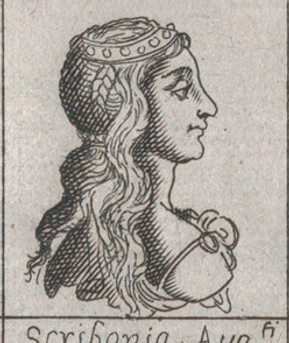
(c. 70 BC-after 16 AD)
BIRTH
c. 70 BC
PLACE
Rome, Italy
DEATH
after 16 AD
PLACE
Rome, Italy
FAMILY
HOMES
RELIGIOUS VIEWS
RELIGION NOT DOCUMENTED
DENOMINATION NOT DOCUMENTED
MEMBERSHIPS
AWARDS
Scribonia married Octavian, the future Augustus, in 40 BCE in a political alliance connected to Sextus Pompeius’s family. She bore Julia in 39 BCE and was divorced when Octavian chose Livia. When Augustus banished Julia in 2 BCE, Scribonia joined her in exile. Seneca later records her advising her relative Libo Drusus during his treason crisis in 16 CE. Her exact birth and death dates are unknown; accounts of her character reflect later authors’ judgments.
EARLY LIFE
Scribonia was born around 70 BC into a noble plebeian family; her father was probably Lucius Scribonius Libo, and her mother was Sentia, and her brother, also Lucius Scribonius Libo, became consul in 34 BC. She was married twice before, first to a man of consular rank and then to Gnaeus Cornelius Lentulus Marcellinus, and had children from her earlier marriages. In 40 BC, when Octavian sought an alliance with Sextus Pompeius, whose father-in-law was her brother, he married Scribonia, who was several years older than he.
Scribonia gave birth to Octavian's daughter, Julia, in 39 BC. On the same day, Octavian divorced her, according to Suetonius because he was tired of her difficult character, and he married Livia soon afterward.
Scribonia did not remarry. In 2 BC, when Augustus banished Julia for adultery to the island of Pandateria, Scribonia voluntarily went into exile with her daughter, and around AD 4 both were moved to Rhegium on the mainland.
She was still alive in AD 16, when Seneca records her advising her great-nephew Marcus Scribonius Libo Drusus, accused of treason, not to take his own life. She disappears from the record after that.
CAREER
DEATH
When Augustus banished Julia in 2 BCE, Scribonia joined her in exile. Seneca later records her advising her relative Libo Drusus during his treason crisis in 16 CE. On the same day, Octavian divorced her, according to Suetonius because he was tired of her difficult character, and he married Livia soon afterward. She was still alive in AD 16, when Seneca records her advising her great-nephew Marcus Scribonius Libo Drusus, accused of treason, not to take his own life. She disappears from the record after that. The surviving record does not establish when or how Scribonia died. The date entry, after 16 AD, marks the limit of documented activity rather than a verified death date. The available biographical account does not describe a continuous final medical course. It gives no dependable sequence of treatment and last symptoms from which to reconstruct a more detailed bedside narrative.

PARK
Baths of Agrippa, Rome


PARK
Forum of Augustus, Rome
Piazza del Grillo 1, Rome, Lazio, Italy

POPULAR BIOGRAPHIES
102870