

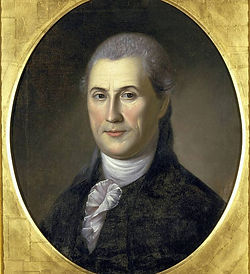
Samuel Huntington
BIRTH
Jul 16, 1731
Windham, Connecticut
DEATH
January 5, 1796
Norwich, Connecticut
President of the Continental Congress
Sep 28, 1779 - Jul 10, 1781
FAMILY
FATHER:

Nathaniel Huntington
(1691-1767)
##
Huntington, Samuel
(1731-1796)
Samuel Huntington was a Connecticut lawyer, statesman, and signer of the Declaration of Independence and Articles of Confederation. He served as president of the Continental Congress during the Revolution and later became governor of Connecticut.
HOMES:
MUSEUM
Samuel Huntington Homestead Museum
36 Huntington Rd, Scotland, CT 06264

1
WIFE
Martha Devotion
(1739-1794)
Places | Image | Address | GPS | Site |
|---|---|---|---|---|
Samuel Huntington Homestead Museum | 36 Huntington Rd, Scotland, CT 06264 | MUSEUM |
DIED:
Norwich, Connecticut
Jan 5, 1796


Samuel Huntington was born on July 16, 1731, in Scotland Parish, then part of Windham and later incorporated into the town of Scotland, Connecticut. He was the fourth of ten children of Nathaniel Huntington and Mehetabel Thurston Huntington. His family were farmers of respectable standing but lacked the wealth commonly associated with college-trained colonial leaders. Samuel grew up working on the family farm and received only the limited common-school instruction available in a rural New England community. Unlike several brothers, Huntington was not initially prepared for college. At about sixteen he was apprenticed to a cooper, learning the skilled work of making barrels and other wooden containers essential to agriculture and commerce. The apprenticeship required physical labor, accuracy, patience, and responsibility. At the same time, he pursued education independently. He borrowed books, studied grammar and classical subjects, and gradually taught himself enough law to seek a different profession. Huntington’s rise was therefore built upon self-education rather than family patronage. He studied legal texts while continuing to work and eventually gained admission to the bar in 1754. He began practicing in Windham and soon moved to Norwich, a larger and more commercially active town. The ability to master law without college training impressed contemporaries and established his reputation for discipline and sound judgment. In 1761 he married Martha Devotion, the daughter of the Reverend Ebenezer Devotion. The couple had no biological children but later raised Samuel’s nephew and niece after the death of his brother. Marriage into a ministerial family strengthened Huntington’s religious and social connections. He joined the Congregational church and became active in local affairs. Before he became a signer of the Declaration of Independence and president of the Continental Congress, Huntington had already crossed striking social boundaries—from farm labor and a cooper’s apprenticeship to legal practice and civic leadership. Rural family life, manual training, religious culture, independent study, and responsibility for extended kin formed the habits of persistence and restraint that characterized his later public career.
The available biographical record identifies Samuel Huntington with work or public activity as a statesman. Those roles provide the clearest documented basis for including this person in the database and should be read in the political, military, professional, or household context of the period. Samuel Huntington died on Jan 5, 1796 in Norwich, Connecticut. Additional claims about employment, public service, or accomplishments have been omitted where the consulted source did not support them.