

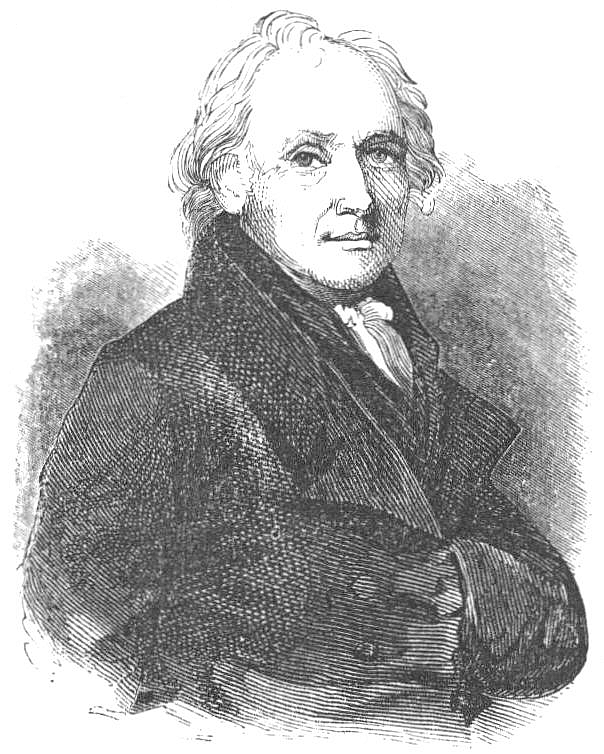
Parson Weems
BIRTH
Oct 11, 1759
Anne Arundel County, Maryland
DEATH
May 23, 1825
Beaufort, South Carolina
FAMILY
FATHER:

David Weems
(1706-1779)
##
Weems, Mason Locke
(1759-1825)
Mason Locke 'Parson' Weems was an American clergyman, bookseller, and biographer whose popular Life of Washington helped shape public memory of the Revolution. He originated or popularized several enduring legends, including the story of young Washington and the cherry tree.
HOMES:
MUSEUM
Weems-Botts Museum
3944 Cameron Street, Dumfries, VA

1
Francis Marion Weems
(1809-?)
Places | Image | Address | GPS | Site |
|---|---|---|---|---|
Weems-Botts Museum | 3944 Cameron Street, Dumfries, VA | MUSEUM |
DIED:
Beaufort, South Carolina
May 23, 1825


Mason Locke Weems was born on October 11, 1759, near Herring Creek in Anne Arundel County, Maryland. He was a son of David Weems, a Scottish-born planter, and Esther Hill Weems, and belonged to a very large family; later accounts call him the nineteenth child. He grew up in the Anglican and plantation society of the Chesapeake, where family property and social standing were intertwined with enslaved labor.
Surviving accounts provide few dependable details about his earliest schooling. Before reaching his teens he was sent away for education, and at roughly fourteen he traveled to Britain. He pursued medical studies in London and Edinburgh, a path that exposed him to anatomy, contemporary science, lectures, print culture, and the performance of learned authority. Although later remembered by the clerical title “Parson,” Weems’s first professional preparation was therefore medical.
Weems did not establish a career as a physician. The reasons for his change of direction are not fully documented, but he turned toward the ministry during a period of institutional uncertainty for American Anglicans. Independence had separated the former colonial churches from the Church of England, while no American bishop yet existed to ordain clergy. Candidates who sought Anglican orders still had to cross the Atlantic.
In 1784 Weems was ordained in England by the Archbishop of Canterbury. He was among the earliest American candidates ordained after Britain formally recognized United States independence. Returning to Maryland, he served Episcopal congregations, including parishes in the Chesapeake region, and developed the animated speaking style that later distinguished his preaching and salesmanship.
The ministry did not provide Weems with a secure income. He began supplementing clerical work by selling books, traveling widely and learning what appealed to ordinary readers. This combination of medical study, religious training, oral performance, and itinerant commerce completed his early formation. Long before he wrote his famous life of George Washington, Weems had learned to move between pulpit and marketplace and to turn moral instruction into vivid, memorable stories for a broad public.
The available biographical record identifies Parson Weems with work or public activity as a writer, clergyperson. Those roles provide the clearest documented basis for including this person in the database and should be read in the political, military, professional, or household context of the period. Parson Weems died on May 23, 1825 in Beaufort, South Carolina. Additional claims about employment, public service, or accomplishments have been omitted where the consulted source did not support them.