

Max Planck
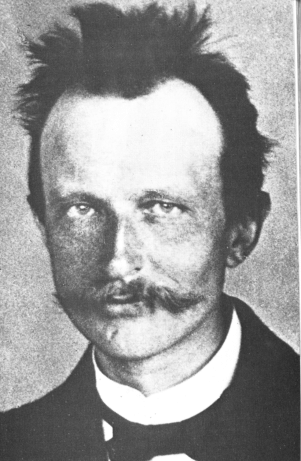
(1858-1947)
BIRTH
April 23, 1858
PLACE
Kiel, Germany
NAME
Karl Ernst Ludwig Marx Planck
DEATH
October 4, 1947
PLACE
Göttingen, Germany
FAMILY

FATHER
Johann Wilhelm von Riedesel
(1705-1782)
MOTHER
Emma Patzig
(1821–1914)
WIFE
Marie Merck
(1861-1909)
HOMES
RELIGIOUS VIEWS
RELIGIOUS AFFILIATION UNCERTAIN
LUTHERAN
MEMBERSHIPS
KAISER WILHELM SOCIETY PRESIDENT, ROYAL SOCIETY FOREIGN MEMBER
AWARDS
COPLEY MEDAL RECIPIENT, MAX PLANCK MEDAL RECIPIENT, NOBEL PHYSICS PRIZE RECIPIENT
German physicist Max Planck originated quantum theory in 1900 by proposing that energy is emitted in discrete quanta, work that earned him the 1918 Nobel Prize in Physics. Planck regarded the quantum at first as a mathematical device, but it became the foundation of quantum physics. He received the Nobel Prize in Physics in 1918 and served as president of the Kaiser Wilhelm Society from 1930 to 1937. Planck died in Göttingen on October 4, 1947.
EARLY LIFE
Max Karl Ernst Ludwig Planck was born on April 23, 1858, in Kiel, then in the Duchy of Holstein, into a family of scholars; his father, Wilhelm Planck, was a professor of law. In 1867 the family moved to Munich, where he attended the Maximilian Gymnasium and showed talent in both music and mathematics. He chose physics despite being told the field was nearly complete, studying at the University of Munich and in Berlin under Hermann von Helmholtz and Gustav Kirchhoff. He earned his doctorate in 1879 with a dissertation on the second law of thermodynamics, the subject that would guide his early research.
Max Planck began his career in theoretical physics through work on thermodynamics and the second law. After study in Munich and Berlin, he became a professor at Kiel in 1885 and moved to Berlin in 1889. He sought general principles behind physical processes rather than treating theory as a catalogue of separate phenomena. Investigations of heat radiation placed him within research combining precise measurements, mathematics and arguments over the microscopic basis of energy and entropy.
In 1900 Planck developed a formula that described the spectrum of black-body radiation. To derive it, he treated the energy associated with oscillators as occurring in discrete elements proportional to frequency, introducing the constant now bearing his name. The step became fundamental to quantum physics, although its meaning was initially unsettled and Planck did not immediately embrace every later interpretation. It was not a complete theory of atoms or a discovery of all the principles of quantum mechanics. Einstein's light-quantum proposal and later investigations by other physicists extended and transformed the significance of the original radiation work.
Planck also supported Einstein's relativity, taught generations of students and helped shape scientific institutions. The Nobel Prize in Physics for 1918 recognized his discovery of energy quanta. After the First World War he worked to restore German research and scientific cooperation amid national isolation and economic strain. Elected president of the Kaiser Wilhelm Society in 1930, he became a prominent representative of German science. His public authority rested on theoretical achievement and long institutional service.
Under National Socialism he tried to preserve scientific work and appealed against the loss of talented Jewish colleagues, but the institutions he led accommodated discriminatory policies and expelled researchers. Private objections and particular acts of support did not prevent that participation. His presidency ended in 1937. War destroyed his Berlin home, and his son Erwin was executed in 1945 for involvement in resistance to Hitler. In his final years Planck again assisted the reconstruction of research institutions, dying in 1947. The society that adopted his name embodied the effort to rebuild German science after the war. His career joins the conceptual foundation of quantum theory with difficult questions about an influential scholar's response to persecution and authoritarian rule.
CAREER
DEATH
Numerous well-known scientists, such as Albert Einstein, Otto Hahn and Lise Meitner were frequent visitors. The tradition of jointly performing music had already been established in the home of Helmholtz. Marie Planck died in July 1909, possibly of tuberculosis. In March 1911 Planck married his second wife, Marga von Hoesslin (1882–1949); in December his fifth child, Hermann, was born. During the First World War, Planck's second son, Erwin, was taken prisoner by the French in 1914, while his oldest son, Karl, was killed in action at Verdun. Grete died in 1917 while giving birth to her first child. Her sister died the same way two years later, after having married Grete's widower. Both granddaughters survived and were named after their mothers. In January 1945, Erwin Planck, to whom he had been particularly close, was sentenced to death by the People's Court because of his participation in the failed attempt to assassinate Hitler in July 1944. Erwin was executed on 23 January 1945. After World War II ended, Planck, his second wife, and their son were brought to a relative in Göttingen, where Planck died on 4 October 1947. He is buried in the Stadtfriedhof in Göttingen.
Stadtfriedhof Göttingen
Stadtfriedhof Göttingen, Kasseler Landstraße 1, 37081 Göttingen, Germany

GRAVE
POPULAR BIOGRAPHIES
1. The Dilemmas of an Upright Man: Max Planck and the Fortunes of German Science — J. L. Heilbron. Find on Amazon
2. Planck: Driven by Vision, Broken by War — Brandon R. Brown. Find on Amazon
3. Der Physiker: Eine Biographie von Max Planck — Ernst Peter Fischer. [German-language biography] Find on Amazon
4. Scientific Autobiography and Other Papers — Max Planck. [Autobiography and primary writings] Find on Amazon
5. Black-Body Theory and the Quantum Discontinuity, 1894–1912 — Thomas S. Kuhn. [Historical study of his scientific work] Find on Amazon
103207