

Jane Seymour
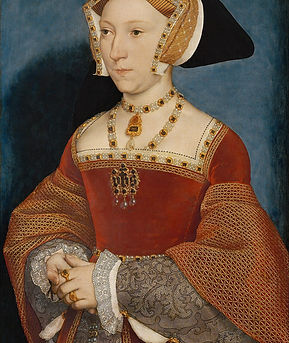
(c. 1508-1537)
BIRTH
c. 1508
PLACE
Wulfhall, England
DEATH
October 24, 1537
PLACE
Hampton Court, England
FAMILY

BROTHER
Edward Seymour, 1st Duke of Somerset
(c. 1500-1552)

HUSBAND
Henry VIII
(1491-1547)

CHILDREN
Edward VI
(1537-1553)
HOMES
RELIGIOUS VIEWS
NOT YET RESEARCHED
NOT YET RESEARCHED
MEMBERSHIPS
AWARDS
Jane Seymour (c.1508–1537) became Henry VIII’s third wife in 1536, soon after Anne Boleyn’s execution. Previously a court attendant, she became queen during a period of religious and dynastic upheaval. She helped promote Mary’s reconciliation with her father and gave birth to the future Edward VI at Hampton Court on October 12, 1537. Jane died twelve days later and was buried at Windsor, where Henry was eventually laid beside her. Her birth date remains uncertain.
EARLY LIFE
Jane Seymour was born in about 1508, probably at Wulfhall in Wiltshire, the daughter of Sir John Seymour, a courtier, and Margery Wentworth. She was one of several children; her brothers Edward and Thomas later became powerful figures at court. She received little formal education but learned needlework and household management. She served as a lady-in-waiting to Queen Catherine of Aragon and then to Queen Anne Boleyn. By early 1536 King Henry VIII had begun to show interest in her.
Jane Seymour entered royal service as an attendant to Katherine of Aragon and later joined Anne Boleyn's household. By early 1536 Henry VIII was courting her, while members of her family and conservative courtiers encouraged the relationship. After Anne's execution, Jane and Henry became engaged and married at Whitehall on May 30, 1536. A royal procession on the Thames introduced her publicly as queen. Her planned coronation was postponed, and she was never crowned.
As queen, Jane supervised her household and required her attendants to follow more traditional English dress. Her public motto emphasized obedience, but reports of her interventions show that she sometimes pressed Henry on sensitive matters. She encouraged his reconciliation with his daughter Mary, who returned to court in July 1536, although Mary did not regain her place in the succession. During the Pilgrimage of Grace, the French ambassador reported that Jane appealed for the restoration of religious houses. Henry warned her against further interference.
Jane's pregnancy in 1537 became central to the dynasty's expectations. She gave birth at Hampton Court to Edward on October 12 and participated in the ceremonial acknowledgment of the heir. Her health then deteriorated, and she died on October 24, twelve days after the birth. Mary acted as chief mourner at her funeral. Jane was buried in St. George's Chapel, Windsor, and Henry was later buried beside her; their son succeeded him as Edward VI in 1547.
CAREER
DEATH
Hampton Court Palace
Molesey, East Molesey, England KT8 9AU, United Kingdom


Jane Seymour died at Hampton Court Palace on 24 October 1537, aged about 28, twelve days after giving birth to the future Edward VI. Her labour had been difficult, lasting about two days and three nights, but the birth on 12 October initially gave Henry VIII the long-awaited male heir. After the child's christening it became clear that Jane was seriously ill. Her condition then deteriorated despite the care available at court. The historical accounts do not permit a single confirmed modern diagnosis. Puerperal infection, complications from a retained placenta and pulmonary embolism have all been proposed by later writers, and the relative merits of those explanations remain debated. The secure point is that the fatal illness followed closely upon childbirth. The sources do not support an invented account of a deliberate operation to sacrifice Jane for the child, a story sometimes attached to royal births in later retellings. Her final days combined the celebration of the prince's arrival with growing concern over the queen's survival. Henry's mourning and her later burial at Windsor belong to the aftermath of that rapid reversal. The supported sequence is prolonged labour, delivery, a brief period of apparent recovery or uncertainty and a worsening postpartum illness ending on 24 October. Exact symptoms and treatments are less consistently preserved than the chronology, so the possible causes should remain qualified.
POPULAR BIOGRAPHIES
Five dedicated biographies were not identified. These editorial selections include biographies where available, with related studies, personal writings and biographical references clearly labelled.
1. Jane Seymour: Henry VIII's True Love — Elizabeth Norton. Find on Amazon
2. Jane Seymour: Henry VIII's Favourite Wife — David Loades. Find on Amazon
3. The Six Wives of Henry VIII — Antonia Fraser. [Collective biography] Find on Amazon
4. The Six Wives of Henry VIII — Alison Weir. [Collective biography] Find on Amazon
5. Six Wives: The Queens of Henry VIII — David Starkey. [Collective biography] Find on Amazon
103651