

Drusus the Elder
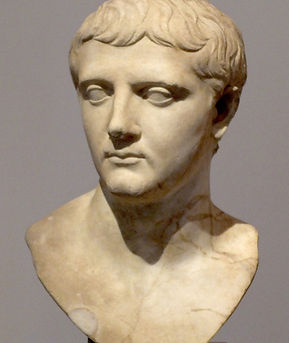
(38 BC-9 BC)
BIRTH
38 BC
PLACE
Rome, Italy
DEATH
9 BC
PLACE
Germany
FAMILY

FATHER
Tiberius Claudius Nero
(died 33 BCE)

MOTHER
Livia Drusilla
(58 BC-29 AD)

STEP FATHER
Augustus
(63 BC-14 AD)

WIFE
Antonia Minor
(36 BC-37 AD)

CHILDREN
Claudius
(10 BC-54 AD)
HOMES
NICKNAMES
the Elder
RELIGIOUS VIEWS
ROMAN POLYTHEIST
DENOMINATION NOT DOCUMENTED
MEMBERSHIPS
AWARDS
OVATION RECIPIENT, TRIUMPHAL ORNAMENTS RECIPIENT
Drusus the Elder was a Roman general and stepson of Augustus who led the first Roman campaigns deep into Germany, reaching the Elbe River. Drusus was popular, charming and ambitious. In 15 BC Drusus and his brother Tiberius campaigned in the Alps, conquering the Raeti and Vindelici. He then governed Gaul and took a census of the province. The senate granted him the name Germanicus after his death. He died in 9 BC after a fall from his horse.
EARLY LIFE
Nero Claudius Drusus was born in 38 BC, the son of Tiberius Claudius Nero and Livia Drusilla, and the younger brother of the future emperor Tiberius. He was born about three months after his mother married Octavian, the future Augustus, and after his father's death in 33 BC he was raised in his stepfather's household. Drusus was popular, charming and ambitious. He was said to favor restoring the Republic. Around 16 BC he married Antonia Minor, the daughter of Mark Antony and Octavia, and they had three surviving children: Germanicus, Livilla and the future emperor Claudius.
Nero Claudius Drusus, known as Drusus the Elder, received accelerated public responsibilities as Augustus's stepson. After holding the quaestorship, he campaigned with his brother Tiberius in the Alps in 15 BC, bringing the Raetian region under Roman control. He then directed affairs in Gaul and on the Rhine, participating in a census and the organization of frontier forces. In 12 BC he dedicated the altar of Rome and Augustus at Lyon.
Drusus's campaigns beyond the Rhine in 12–9 BC combined land operations, river transport and naval movement toward the North Sea. He cultivated alliances with groups including the Batavians and operated against the Sugambri, Chatti and other communities. Forts and supply routes supported repeated advances into the interior. A canal associated with his command linked the Rhine system with waterways toward the coast, helping move men and material. These operations extended Roman influence without creating a permanently secure province.
As consul in 9 BC, Drusus led another campaign and reached the Elbe before turning back. He died on the return journey after an injury traditionally attributed to a fall from his horse. Tiberius traveled to him and subsequently continued the command. Drusus received honors, burial in Augustus's mausoleum and the name Germanicus for his family. Later stories about his republican sympathies remain difficult to verify. His reputation strengthened the standing of his sons Germanicus and the future emperor Claudius.
CAREER
DEATH
Drusus the Elder died in 9 BC after the campaign that had taken Roman forces toward the Elbe. His final return from Germania was interrupted by the injury or illness described in the ancient sources. Livy's surviving epitome says that a horse fell on his leg, causing a fracture, and that he died thirty days later. Other writers describe the fatal illness without giving the same account of an accident. A prolonged decline after a severe injury is therefore a reported tradition, while a diagnosis such as gangrene or blood poisoning would go beyond what can be demonstrated. His brother Tiberius hurried to reach him and was present before the end, an episode emphasized in Roman accounts of their closeness. Drusus was still young and remained central to Augustus's plans on the northern frontier. His death stopped an expanding command rather than concluding a long retirement. His body was brought back toward Rome with elaborate honors, and his ashes were placed in the Mausoleum of Augustus. Stories of omens encountered during the expedition belong to the ancient literary framing of an unexpected loss. They do not explain a medical cause. The most cautious reconstruction is of a commander who became gravely incapacitated on his return journey, survived for a time under care, and died before he could resume his campaigns.

PARK
Baths of Agrippa, Rome

PARK
Forum of Augustus, Rome
Piazza del Grillo 1, Rome, Lazio, Italy


PARK
Villa of Livia, Prima Porta
Via della Villa di Livia 187, Rome, Lazio, Italy


PARK
House of Livia, Palatine Hill
Via di San Gregorio 30 (Palatine Hill entrance), Rome, Lazio, Italy

PARK
House of Augustus, Palatine Hill
Via di San Gregorio 30 (Palatine Hill entrance), Rome, Lazio, Italy

POPULAR BIOGRAPHIES
These selections combine dedicated biographies where available with clearly labelled related studies, memoirs, primary accounts or biographical references.
1. Eager for Glory: The Untold Story of Drusus the Elder, Conqueror of Germania — Lindsay Powell. Find on Amazon
2. Antonia Augusta: Portrait of a Great Roman Lady — Nikos Kokkinos. [Related biography of his wife] Find on Amazon
3. Tiberius the Politician — Barbara Levick. [Related biography of his brother] Find on Amazon
4. Livia: First Lady of Imperial Rome — Anthony A. Barrett. [Related biography of his mother] Find on Amazon
5. The Twelve Caesars — Suetonius. [Ancient collective biography] Find on Amazon
103031