

Christopher Gadsden
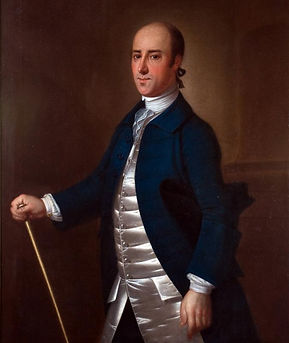
(1724-1805)
BIRTH
February 16, 1724
PLACE
Charleston, Province of South Carolina, British America
DEATH
August 28, 1805
PLACE
Charleston, South Carolina, U.S.
FAMILY

FATHER
Thomas Gadsden
(birth date unknown)
WIFE
Jane Godfrey
(d. before December 29, 1755; birth unknown)
CHILDREN
Elizabeth Gadsden
(birth date unknown)
WIFE
Mary Hasell
(1734-1768/1769)
WIFE
Ann Wragg
(1731-1806)
HOMES
NICKNAMES
Sam Adams of the South
POLITICAL VIEWS
CHURCH DISESTABLISHMENT ADVOCATE, IMPERIAL TAXATION OPPONENT
RELIGIOUS VIEWS
CHRISTIAN
ANGLICAN
MEMBERSHIPS
CHARLESTON SONS OF LIBERTY ORGANIZER, ST PHILIP’S CHURCH CHARLESTON MEMBER
AWARDS
Christopher Gadsden (1724–1805) was a Charleston merchant and advocate of resistance. He helped lead the Sons of Liberty, represented South Carolina in the Continental Congress and served as a military officer and lieutenant governor. His name became associated with a rattlesnake flag. Captured after Charleston fell, he refused a new parole and endured confinement at St Augustine. His commercial wealth included a wharf built with enslaved labor that became a slave port.
EARLY LIFE
Christopher Gadsden was born on or about Feb 16, 1724 in Charleston, Province of South Carolina, British America. The names of the parents are not yet securely established in this database. The surviving evidence represented in this record does not always preserve the details of childhood schooling, household routine, religious instruction, apprenticeship, or youthful travel.
Christopher Gadsden built one of Charleston's leading mercantile businesses, investing in ships, stores, plantations and a major wharf. His wealth depended partly on enslaved labour. Entering the Commons House of Assembly in the 1750s, he became a forceful opponent of imperial taxation and a leader of South Carolina's radical resistance. His advocacy of colonial liberty coexisted with his interests as a enslaver.
At the Stamp Act Congress in 1765, Gadsden urged cooperation across colonial boundaries rather than separate appeals based only on local privileges. He organised the Sons of Liberty and served in the Continental Congress in 1774–76. On its naval committee he supported the emerging Continental Navy. The yellow rattlesnake flag associated with him, carrying the warning Don't Tread on Me, became an emblem of resistance, although the wider use of snake symbolism predated his design.
Returning to South Carolina in 1776, he promoted independence, helped frame the state constitution and commanded the First South Carolina Regiment. He became a Continental brigadier general. A dispute with Robert Howe over military authority prompted his resignation in 1777 and later a duel in which neither was injured. In state politics he favoured disestablishment of the church and broader electoral participation, positions that brought him into conflict with conservative leaders.
As lieutenant governor during the British capture of Charleston in 1780, Gadsden became a prisoner. Taken to St Augustine, he refused a new parole under conditions he considered inconsistent with the surrender agreement and endured close confinement. After release, he declined election as governor in 1782, citing health and age, but continued public service and supported ratification of the United States Constitution in 1788. His career linked commercial power, revolutionary mobilisation and state-building, while exposing the exclusions within the liberty claimed by South Carolina's patriot leadership.
CAREER
DEATH
Gadsden was returned to South Carolina's House of Representatives, then meeting at Jacksonboro. At this session, Governor Randolph and de facto President Rutledge both surrendered their offices. Gadsden was elected as the governor but felt he had to decline. His health was still impaired from his imprisonment, and an active governor was needed since the British had not yet given up Charleston. So in 1782, John Mathews became the new governor. Gadsden was also a member of the state convention in 1788 and voted for ratification of the United States Constitution. In 1798, he built the imposing house at 329 East Bay Street in the Ansonborough area of Charleston that remained in the family for more than a century; famous ironworker Philip Simmons built the gates that incorporate a snake motif, drawn from the "Don't Tread on Me" flag that Gadsden designed. Gadsden was married three times and had four children with his second wife. Three of his grandsons, all brothers, were also notable: Christopher Edwards Gadsden, who served as the fourth Episcopal Bishop of South Carolina James Gadsden, for whom the Gadsden Purchase of Arizona was named John Gadsden, who served two terms as the Mayor of Charleston Gadsden died from an accidental fall on August 28, 1805, in Charleston, and is buried there in St. Philip's Churchyard.
St. Philip's Episcopal Church Cemetery
St. Philip's Church, Charleston, SC, 29401, United States

GRAVE
POPULAR BIOGRAPHIES
Dedicated biographies are supplemented by his writings and clearly labelled histories of his South Carolina setting.
1. Christopher Gadsden and the American Revolution — E. Stanly Godbold Jr. and Robert H. Woody. Find on Amazon
2. Christopher Gadsden and Henry Laurens: The Parallel Lives of Two American Patriots — Daniel McDonough. [Joint biography] Find on Amazon
3. The Writings of Christopher Gadsden, 1746–1805 — Christopher Gadsden; Richard Walsh (editor). [Annotated correspondence and writings] Find on Amazon
4. Colonial South Carolina: A History — Robert M. Weir. [Historical context for his life and politics] Find on Amazon
5. South Carolina: A History — Walter Edgar. [Historical context for his revolutionary career] Find on Amazon
101872