

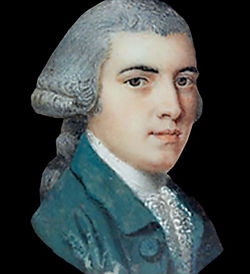
Benjamin Harrison V
BIRTH
Apr 5, 1726
Charles City County, Virginia
DEATH
April 24, 1791
Charles City County, Virginia
Governor of the Commonwealth of Virginia
1781-1784
Delegate to the Continental Congress (VA)
FAMILY
FATHER:

Benjamin Harrison IV
(1693-1745)
##
Harrison, Benjamin V
(1726-1791)
Benjamin Harrison V was a Virginia planter and statesman who represented Virginia in the Continental Congress and signed the Declaration of Independence. He later served as governor of Virginia during the closing years of the Revolutionary War.
BIRTHPLACE:
MUSEUM
Berkeley Plantation
12602 Harrison Landring Road, Charles City, VA

4
WIFE
Elizabeth Bassett
(1730-1792)
Anne Harrison
Benjamin Harrison VI
(1755-1799)
Sarah Harrison Blair
(1670-1713)
Lucy Harrison
(1844-1915)
Elizabeth Harrison
(1723-1783)
Carter Bassett Harrison
(?-1808)
Places | Image | Address | GPS | Site |
|---|---|---|---|---|
Independence National Historical Park | 520 Chestnut St, Philadelphia, PA 19106 | MUSEUM | ||
Colonial Williamsburg | 101 Visitor Center Dr, Williamsburg, VA 23185 | MUSEUM | ||
Berkeley Plantation | 12602 Harrison Landring Road, Charles City, VA | MUSEUM | ||
St John's Church | 2401 E Broad St, Richmond, VA 23223 | MUSEUM |
DIED:
Charles City County, Virginia
Apr 24, 1791


Benjamin Harrison V was born on April 5, 1726, at Berkeley plantation in Charles City County, Virginia, the son of Benjamin Harrison IV and Anne Carter Harrison. Through his mother he was a grandson of Robert “King” Carter, one of the colony’s wealthiest landowners. Harrison therefore entered the highest rank of Virginia’s planter elite. His parents died in 1745 after being struck by lightning, leaving the nineteen-year-old Harrison heir to Berkeley, extensive lands, and enslaved people. He had attended the College of William and Mary but did not complete a degree, probably because inheritance forced an early assumption of estate responsibilities. Harrison married Elizabeth Bassett, daughter of Colonel William Bassett, joining another prominent family. They had numerous children, including future president William Henry Harrison. Managing Berkeley required attention to crops, shipping, debts, household staff, and a large enslaved workforce. His wealth and family name brought rapid entry into the House of Burgesses. Harrison developed a reputation for sociability, practical judgment, and defense of Virginia interests. Though less philosophically inclined than some colleagues, he understood legislative negotiation and the concerns of planters dependent upon Atlantic trade. Before signing the Declaration and serving as governor, Harrison had been shaped by extraordinary inheritance, sudden parental loss, interrupted college education, marriage, fatherhood, plantation administration, slavery, and early legislative service. His political independence rested upon vast property, yet that property depended upon human bondage. The mixture of personal warmth, conservative social standing, and resistance to parliamentary control defined the world from which his Revolutionary leadership emerged.
The available biographical record identifies Benjamin Harrison V with work or public activity as a soldier, statesman. Those roles provide the clearest documented basis for including this person in the database and should be read in the political, military, professional, or household context of the period. Benjamin Harrison V died on Apr 24, 1791 in Charles City County, Virginia. Additional claims about employment, public service, or accomplishments have been omitted where the consulted source did not support them.